Freemasons Give $50,000 to Name AHOC Patient Suite 1
Some legacies are carried in ritual and symbol, passed down through generations of shared commitment. Others are built through pledges made over years, quiet visits, and the decision to stand publicly behind a cause close to home. For the District One Freemasons, both are true, and now their commitment has a permanent home at the Aroostook House of Comfort, Patient Suite 1.
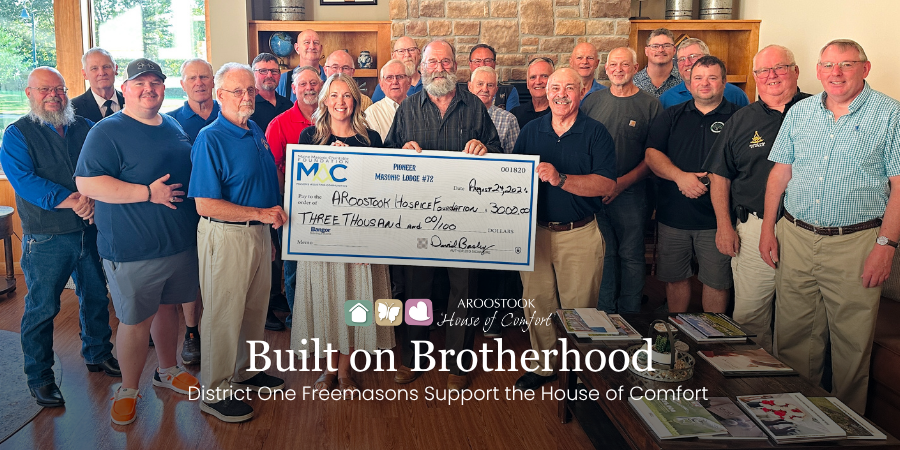
On Monday, August 24, representatives of the District One Freemasons presented the Aroostook Hospice Foundation with a $3,000 gift, the first installment of a five-year pledge totaling $50,000. In recognition of this significant commitment, Patient Suite 1 has been dedicated by the District One Freemasons, and their blue Masonic emblem, the square and compasses with the letter G at its center, now marks the entrance to the suite.
A Symbol with Deep Meaning
For the Freemasons, the decision to support the House of Comfort wasn't a difficult one. David Basley, representing District One, shared the significance behind the gift:
"The decision made by the 1st District Freemasons to present a gift of $50,000 to the House of Comfort was an easy one for us. Since the facility first opened in 2018, several members of our Masonic fraternity, or family members, have experienced the most compassionate end-of-life care offered by staff and volunteers. Our blue Masonic emblem, the square and compasses with the letter G in the center, now present at the entrance to Patient Suite 1, is a constant reminder of the tenets on which Freemasonry is founded: Brotherly Love, Relief and Truth toward all people. Nowhere is this more practiced than within the House of Comfort. We are most proud to display our public support for the Aroostook Hospice Foundation."
That connection between personal experience and public commitment is exactly what makes gifts like this one so meaningful. Many of the Freemasons involved have watched firsthand as loved ones received care at AHOC, and the dedication of Suite 1 turns that experience into a lasting tribute for the families who will walk through its doors in the years ahead.
A Lasting Investment
Abbey Clair, Executive Director of the Aroostook Hospice Foundation, says gifts of this scale do more than support daily care. They help secure the House of Comfort's future.
"We are incredibly grateful to the District One Freemasons for choosing to make such a significant and lasting investment in the Aroostook House of Comfort," Clair said. "A commitment of this magnitude helps strengthen our ability to care for this special place today while also helping secure its future for the patients and families who will need it for years to come. We are honored to have the District One Freemasons represented within Suite 1 and deeply appreciate their confidence in our mission."
The gift was made through the Aroostook Hospice Foundation's Naming Opportunities campaign, which invites individuals, families, businesses, and organizations to create a lasting legacy within the House of Comfort while directly supporting the Foundation's mission. Patient suites, like the one now bearing the Masonic emblem, are among the campaign's most visible tributes, offering a peaceful, homelike setting where families find comfort, connection, and dignity during a loved one's final days.
A Legacy of Brotherhood and Comfort
Since opening in 2018, the Aroostook House of Comfort has remained the only inpatient hospice facility north of Augusta, offering compassionate end-of-life care to patients and families throughout Aroostook County and beyond. The District One Freemasons' commitment ensures that legacy continues, backed by a fraternity whose own founding principles, Brotherly Love, Relief, and Truth, align closely with the mission playing out inside the House of Comfort every day.
Interested in creating your own lasting tribute at the Aroostook House of Comfort? Explore the remaining naming opportunities or reach out to Executive Director Abbey Clair at (207) 299-2053 to start the conversation.
Recent Stories
Freemasons Give $50,000 to Name AHOC Patient Suite 1
Northern Light Grief Support Group in Houlton
Northern Light Grief Support Group in Presque Isle
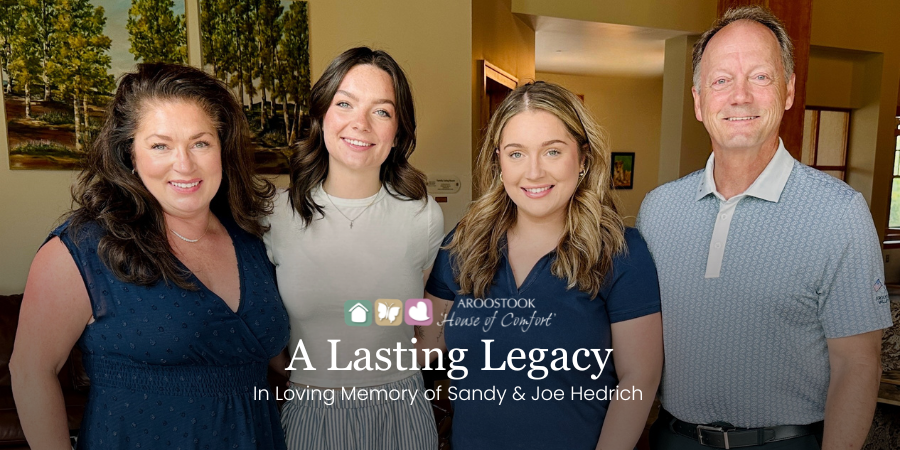
Hedrich Family Honors Loved Ones with New Naming Gift
Grief Notes: Am I Going Crazy or Is This Normal?